
Leep Audio
Client: Leep Audio
My Role: UX, Visual
Tools: Figma, FigJam, Claude
Duration: 5 weeks

STARTING POINT
Establishing a New Direction
Leep had previously worked with another design team, but the client chose to move away from much of the earlier direction. With limited access to that work, our team needed to establish a fresh understanding of the product and work closely with the client to define what the next version of Leep should become. Rather than treating the previous work as our research foundation, we used client conversations and our own competitive research to establish the direction for the Competitions experience.
COMPETITIVE RESEARCH
Looking Beyond Music Competitions
I analysed platforms across music, creative communities, and collaboration to understand how they approached discovery, participation, feedback, and ongoing engagement. Rather than looking for a single product to replicate, I focused on interaction patterns that could be adapted to Leep's music-first experience.
Looking at the Existing Landscape:
I analysed SoundCloud, Mixcloud, and BandLab to understand how musicians currently discover opportunities, engage with creative communities, and collaborate online.
01 — Make Competitions Feel Like Events
Competition experiences can build anticipation before, during, and after submissions rather than focusing solely on announcing a winner.
02 — Give Every Submission Value
Participation should create opportunities for exposure and discovery, even for artists who don't win.
03 — Make the Community Part of the Experience
Voting, commenting, and sharing can turn listeners from passive audiences into active participants.
04 — Make Participation Easy to Understand
Clear rules, competition stages, progress, and consistent layouts help users understand what is happening and what they need to do.
The Opportunity
Leep could combine the structure of competition platforms with the discovery, feedback, and community behaviours found across creative platforms—creating an experience designed specifically around music.
VISUAL DIRECTION
Giving Leep a Stronger Visual Identity
The client wanted a clean, futuristic interface with vibrant colour. I developed two moodboards exploring how that direction could feel expressive and music-focused without becoming visually overwhelming.

The first explored larger imagery, layered layouts, and stronger hierarchy to create a more immersive, energetic experience.

The second introduced softer depth through gradients, shadows, and restrained neumorphic influences.
MAPPING THE EXPERIENCE
Defining the Key Journeys
Before moving into individual screens, our team mapped the core journeys through the Competitions experience, from discovering an opportunity to participating and following its progress.
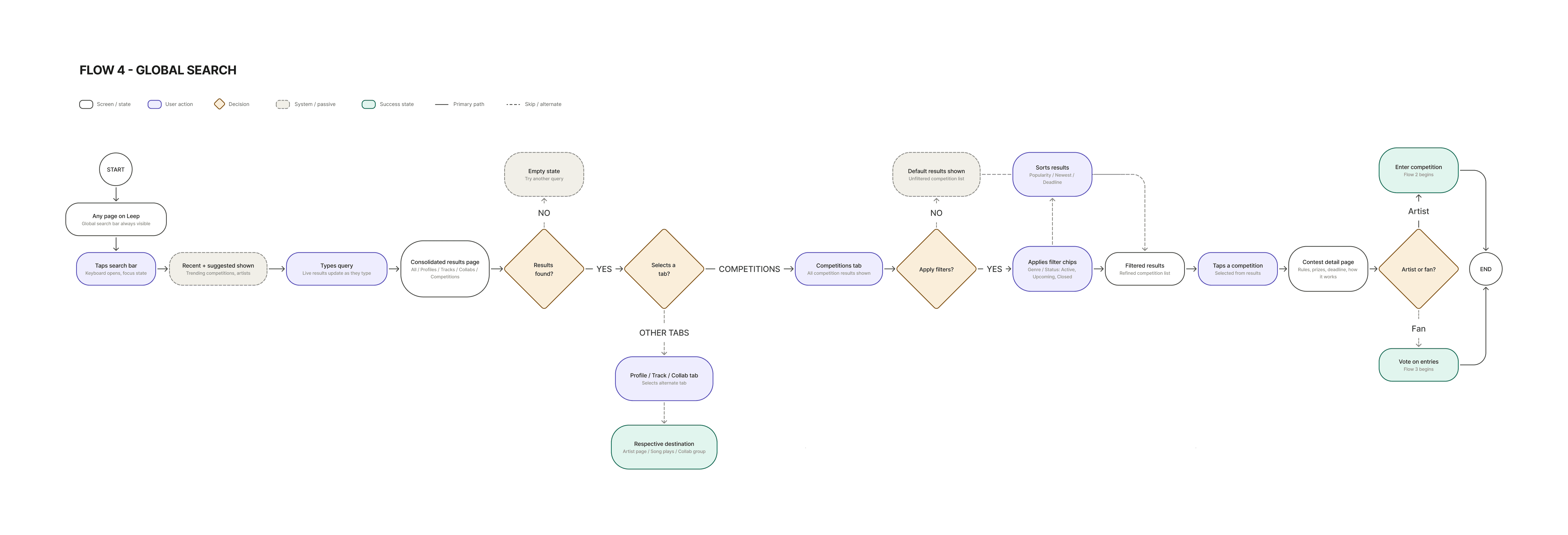
My contribution included Flow 4, which explored how users could discover competitions through Leep's global search. This created an additional entry point into the experience and made competitions easier to discover from elsewhere on the platform.
WIREFRAMING
Turning the Structure Into Screens
Once the core journeys were established, we moved into low-fidelity wireframes to explore layouts and interactions before committing to the final visual direction.

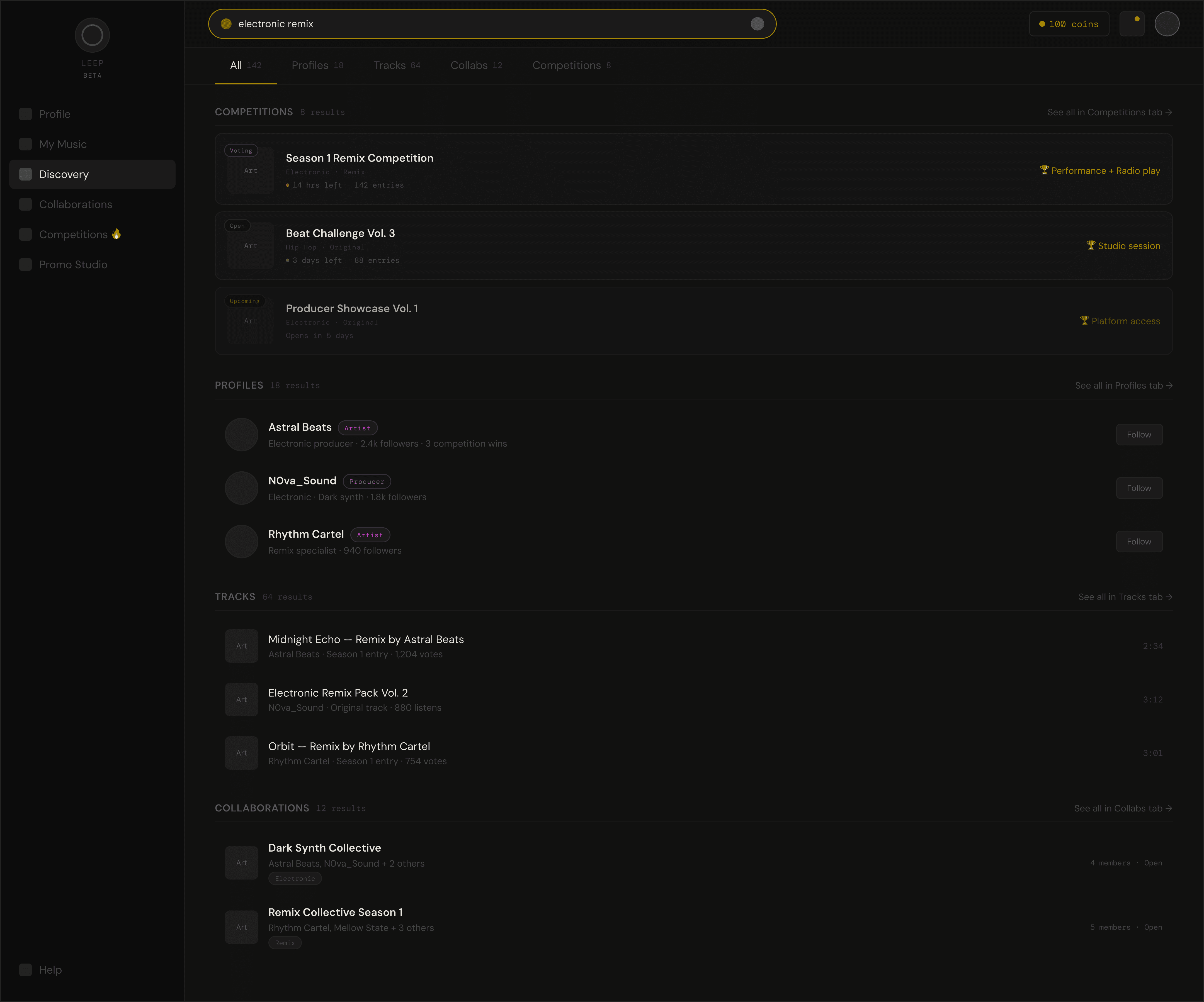
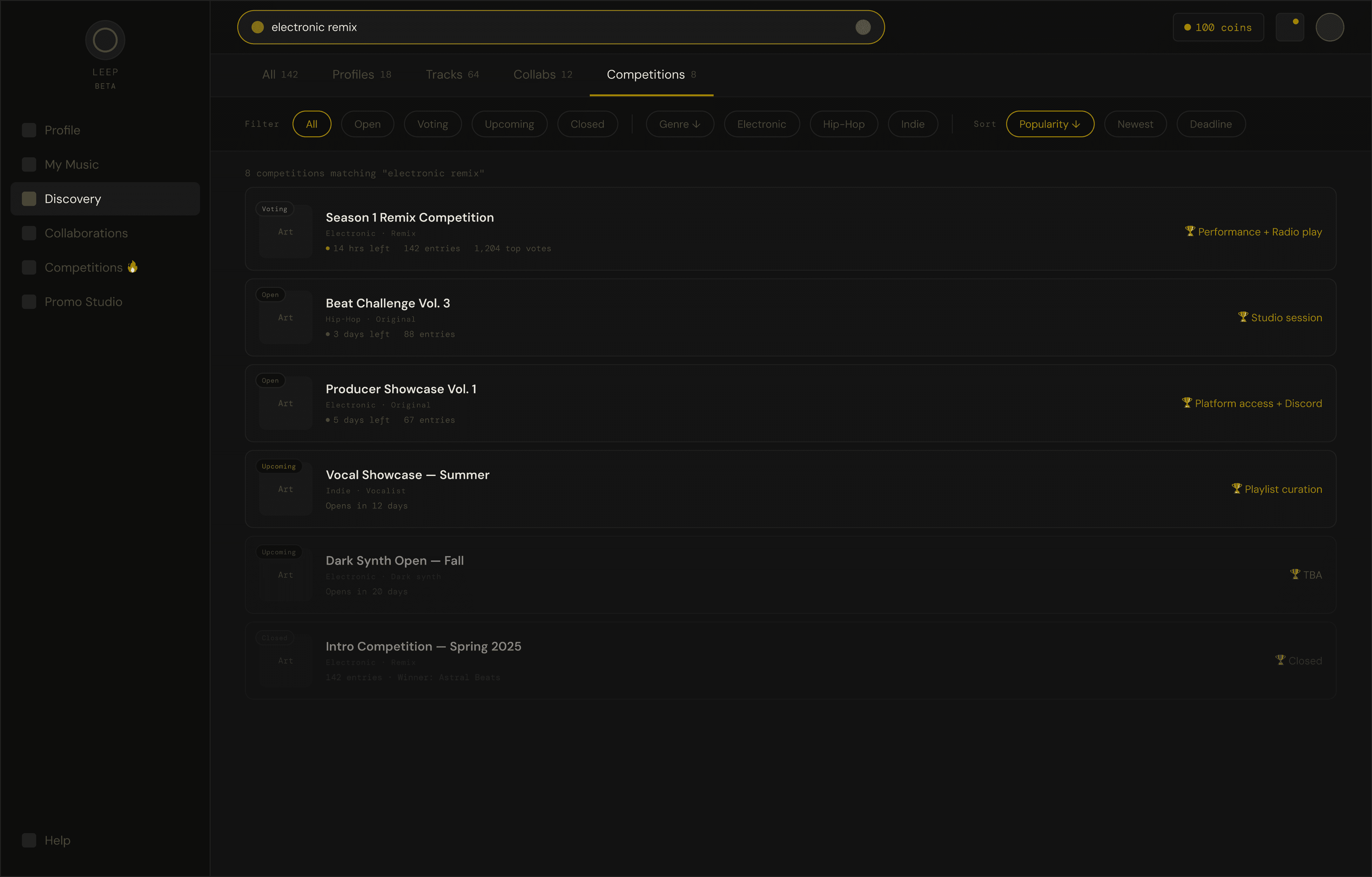


We reviewed the screens collaboratively and presented iterations to the client throughout the process, allowing requirements and interactions to evolve before moving into high fidelity.
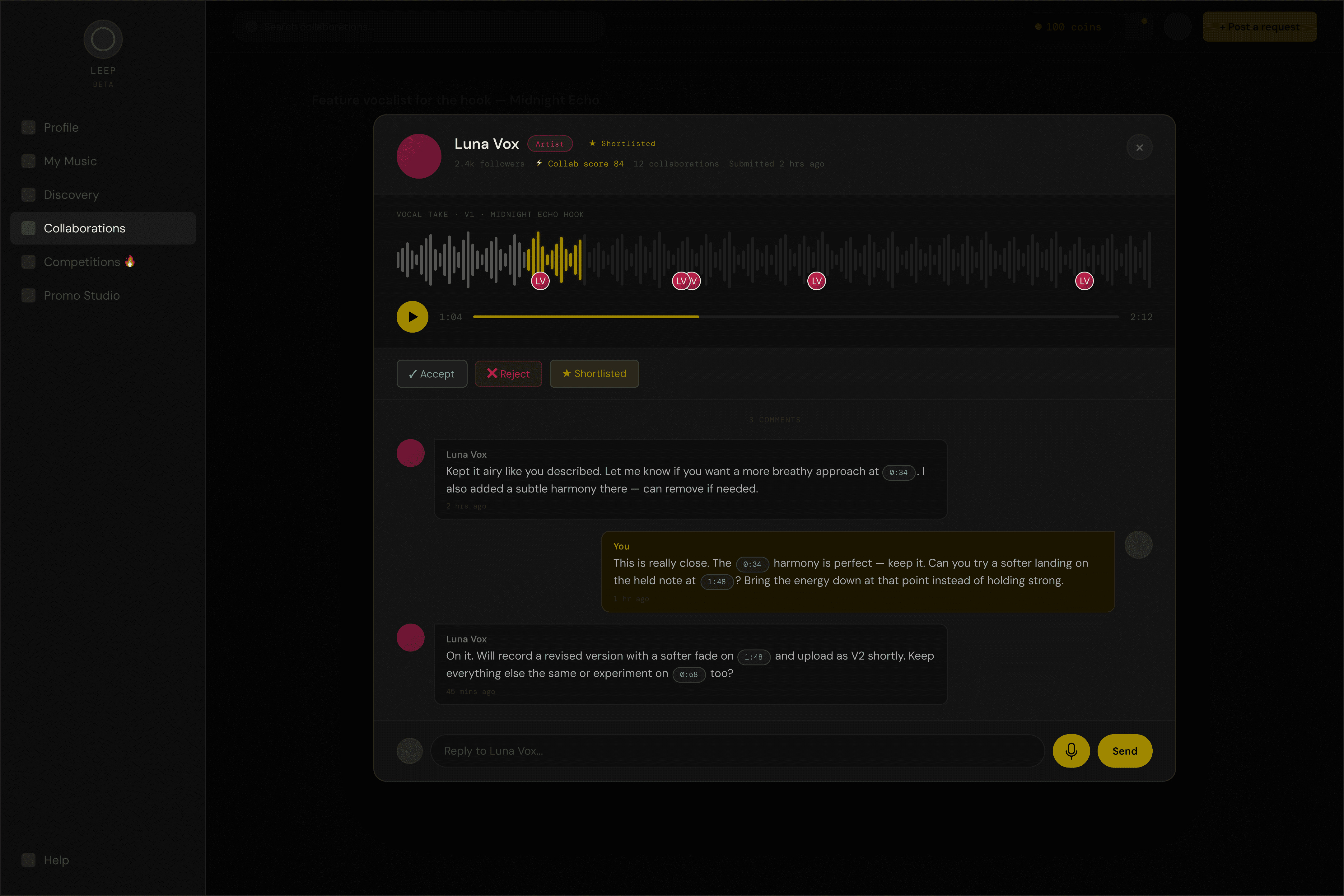
As the project progressed, the scope also expanded to include Collaborations. I contributed to additional low-fidelity concepts exploring how artists could request sounds and discover opportunities to work together.
CLIENT COLLABORATION
Feedback Shaped the Experience
Leep was a live client project, so design decisions were reviewed throughout the process rather than presented only at the end. Conversations helped us clarify requirements, understand the reasoning behind client requests, and refine the experience as their vision became more tangible.
01 — More Context Before Clicking
The client wanted users to understand more about a competition before committing to its detail page. In response, I introduced a hover state that reveals a short competition description while keeping the default card easy to scan.

02 — A More Purposeful Visual Language
Our visual explorations also prompted conversations about how colour should function throughout the experience. Accent colours evolved into a system that communicates competition states, making colour useful for orientation as well as visual identity.
HIGH-FIDELITY DESIGN
Bringing the Competitions Experience Together
My primary responsibility during high-fidelity design was the Competitions landing page. The page gives users an overview of current opportunities while supporting different ways to discover and return to competitions.

DESIGN SYSTEM
Designing Beyond a Single Screen
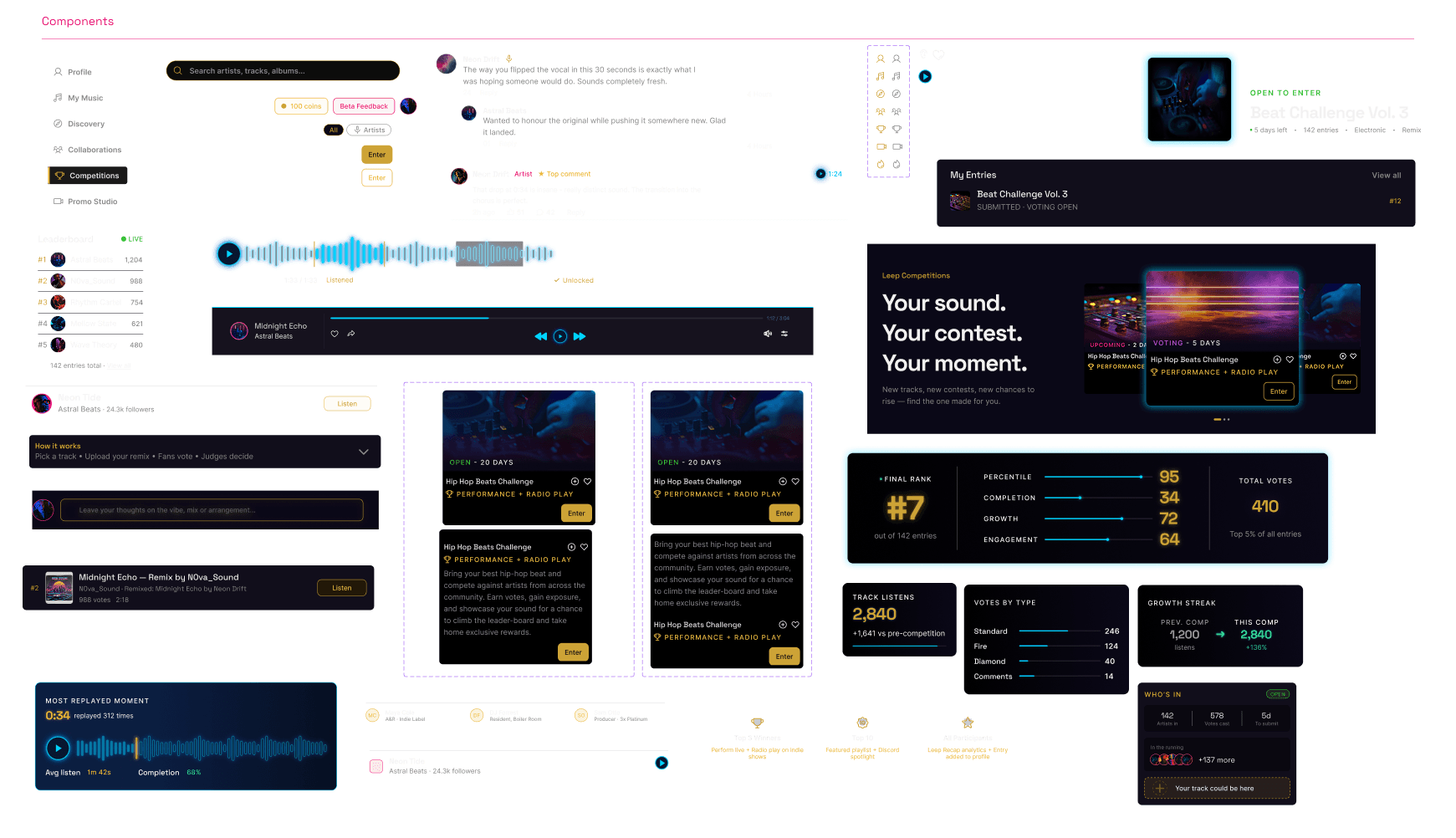
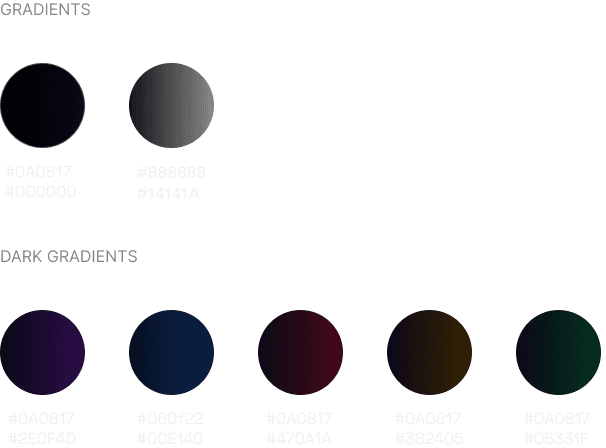
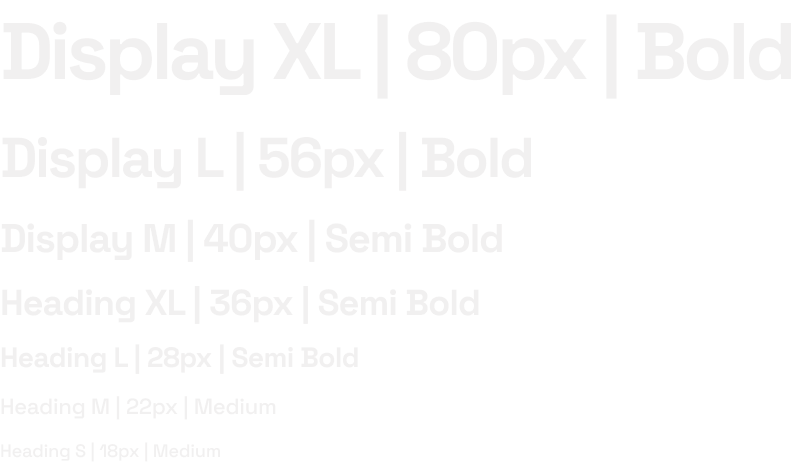
The client intended to use Lovable to develop the platform, making consistency and reusable patterns particularly important as our designs moved toward implementation. As a team, we developed a shared component library containing reusable UI patterns, typography, colour styles, and components that could be applied across Leep.

Colours


Typography
SPACE GROTESK
Typography
INTER

PROTOTYPE

CLIENT FEEDBACK
What Did Leep Think?
"Everyone worked in a timely manner and really came together to produce a wonderful result. Even when asked to adjust few things with in the little time they had they went above and beyond very happy how this came out"
Leep Audio
CEO
BEYOND THE MVP
Where I'd Take It Next
The five-week timeline meant our focus remained on defining and designing the experience rather than fully validating the final prototype.
01 — Usability Testing
I would test the high-fidelity experience with artists, producers, and fans to validate competition discovery, comprehension, and key interactions before further development.
02 — Develop Collaborations
The early Collaborations concepts could be developed into a complete experience and tested to understand how artists want to request contributions, discover collaborators, and manage creative work together.
Reflection
Leep gave me experience working within a client-led product process where requirements continued to develop as ideas became tangible.
It strengthened my ability to communicate design decisions, respond to changing priorities, and contribute to a shared product while balancing user needs, business goals, and a limited timeline.

What I Took Away From the Project
01 — Understand the need behind the feedback.
Client requests became much easier to solve when I understood the problem they were trying to address rather than treating the requested solution literally.
02 — Look beyond direct competitors.
Studying different types of platforms revealed interaction patterns that could be adapted to LEEP without simply recreating another music product.
03 — Build consistency as you go.
Working across a five-person design team showed me the value of developing shared components and patterns alongside the product rather than trying to standardise everything at the end.