
LinguaLink
Learning a new language can be intimidating, especially for immigrants settling into their new home. LinguaLink is a platform designed to connect learners with real language mentors, helping users build confidence through guided conversations and real-world scenarios. By combining structured lessons with a mentor-matching system, the platform encourages learners to practice speaking regularly while receiving supportive feedback.
Role(s)
UX/UI Designer
Brand Designer
Duration
4 months
Learning a New Language Is Only Part of the Challenge
The Problem
Moving to a new country often comes with significant challenges, such as language barriers, loneliness, and adapting to unfamiliar systems. While it was tempting to try to address all of these issues at once, I quickly realized that attempting to solve too many problems would lead to shallow solutions. Instead, I chose to focus on one area where meaningful impact could be made.
Understanding the Challenges Behind Language Learning
Competitive Analysis
To better understand the existing landscape of language learning platforms, I analysed three major competitors: Duolingo, Busuu, and Babbel. Each platform approaches language learning differently, revealing opportunities for innovation.

User Interviews
I conducted interviews to identify key pain points of people moving to a new country. These findings informed the design of LinguaLink’s core features.
Key Findings
%
Participants reported that language barriers made integration more challenging.
%
Participants expressed that a lack of meaningful social connections negatively affected their emotional well-being.
How might I make learning a new language more accessible and practical for newcomers?
And…
How might I create opportunities for newcomers to feel a sense of belonging and support?
Turning Research into a Clear Direction
Sitemap
To structure the app and simplify navigation, I created a sitemap outlining the key features and content.
User Flow and Task Flows
I created a user flow to map how users would navigate the product. Then I mapped out task flows to visualize how users would complete key tasks.
(Switch to "Task Flows" page to view the task flows).
Exploring Ideas Before Committing to a Direction
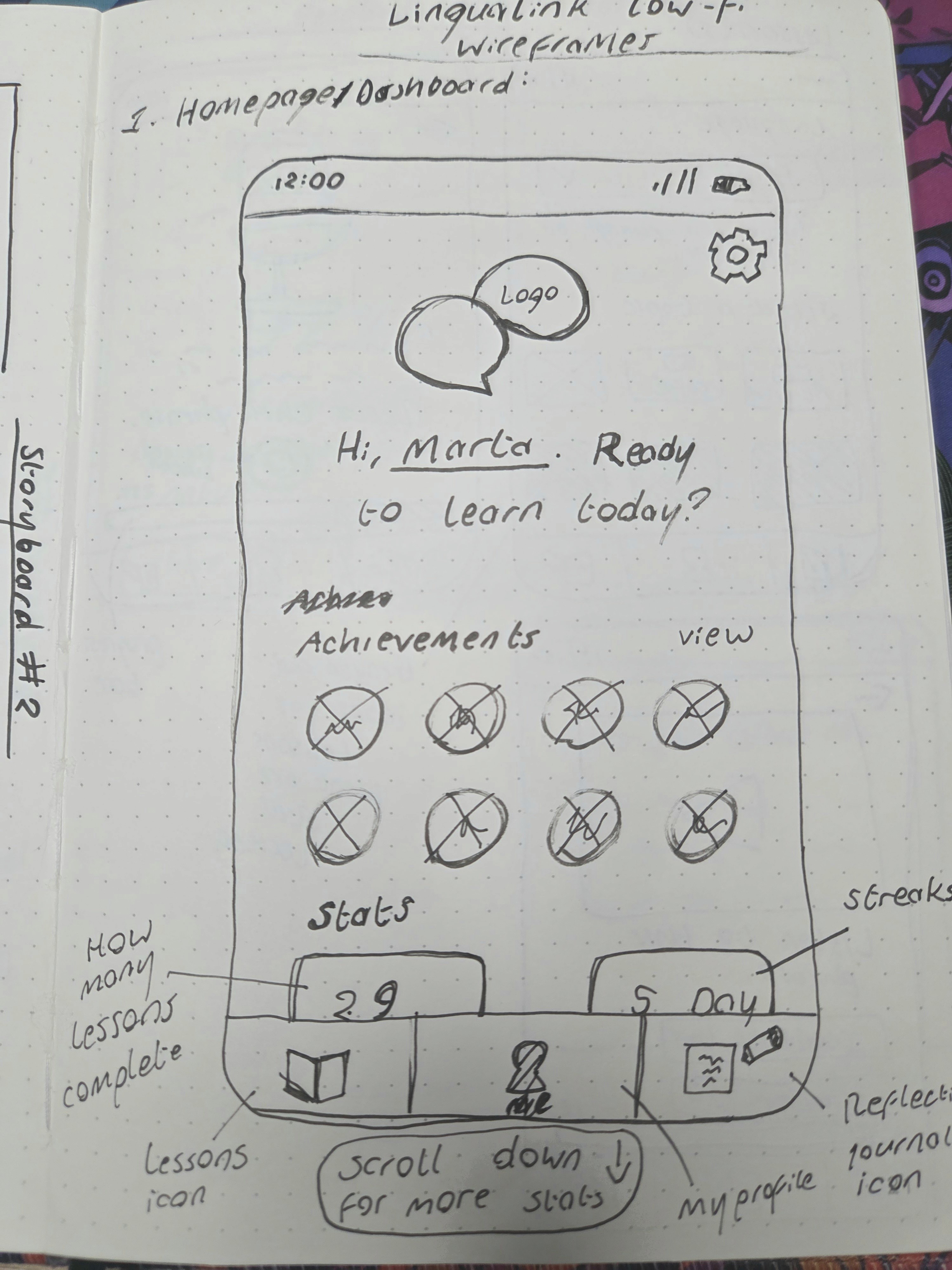
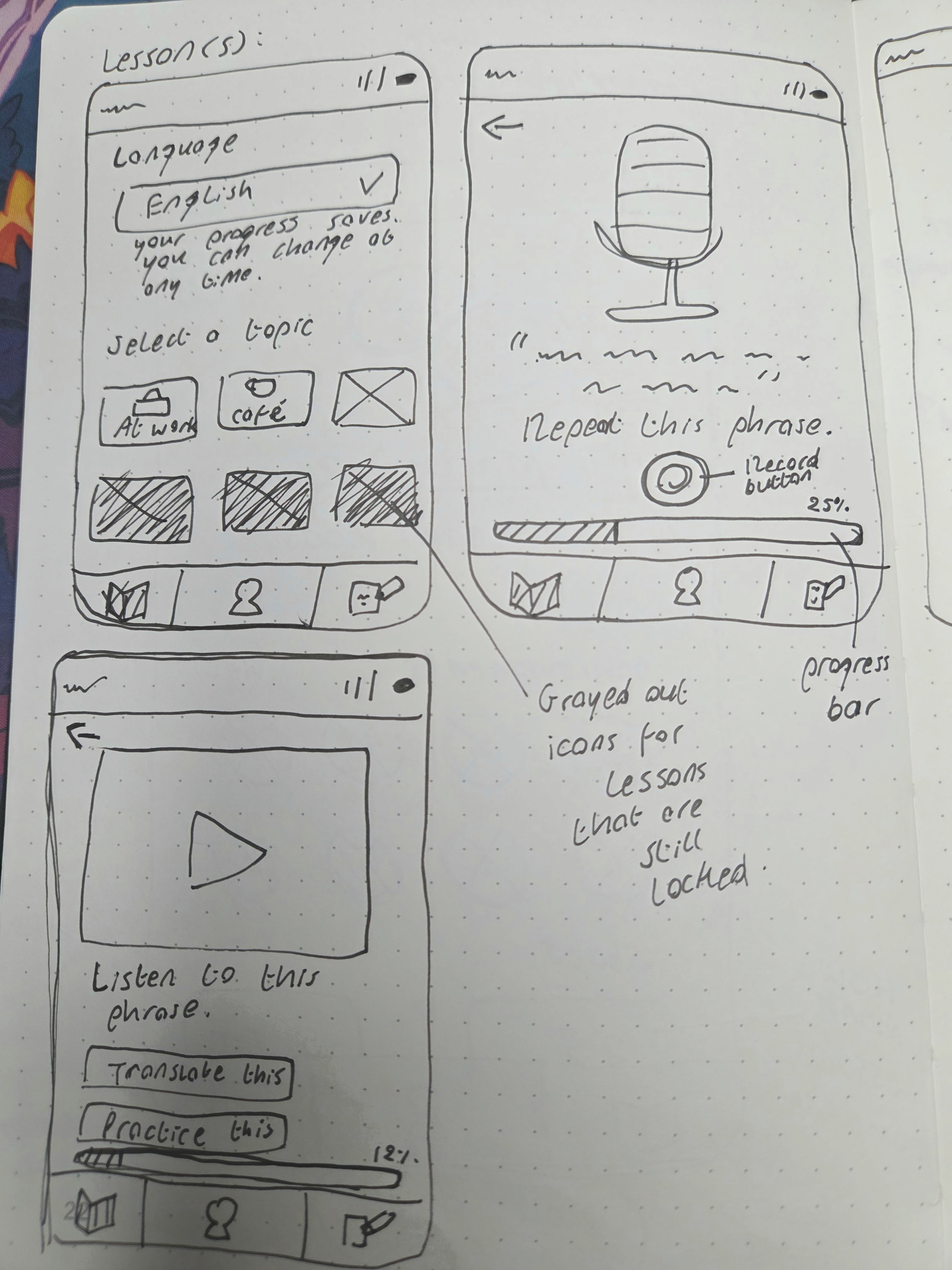
At this point, I had a clear direction for the product and its features. But where do we go from here? Well, you can never go wrong with starting with a few sketches.
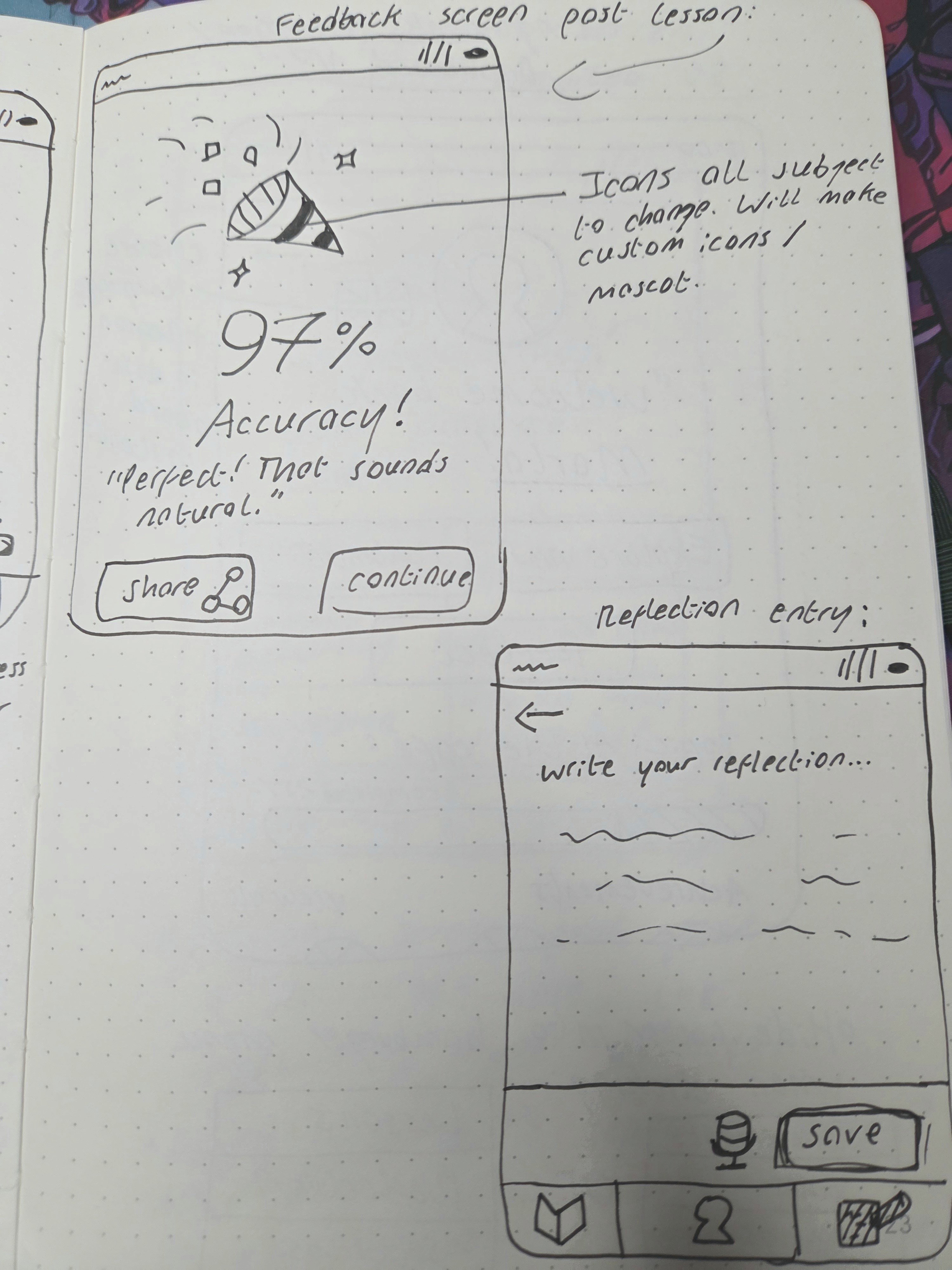
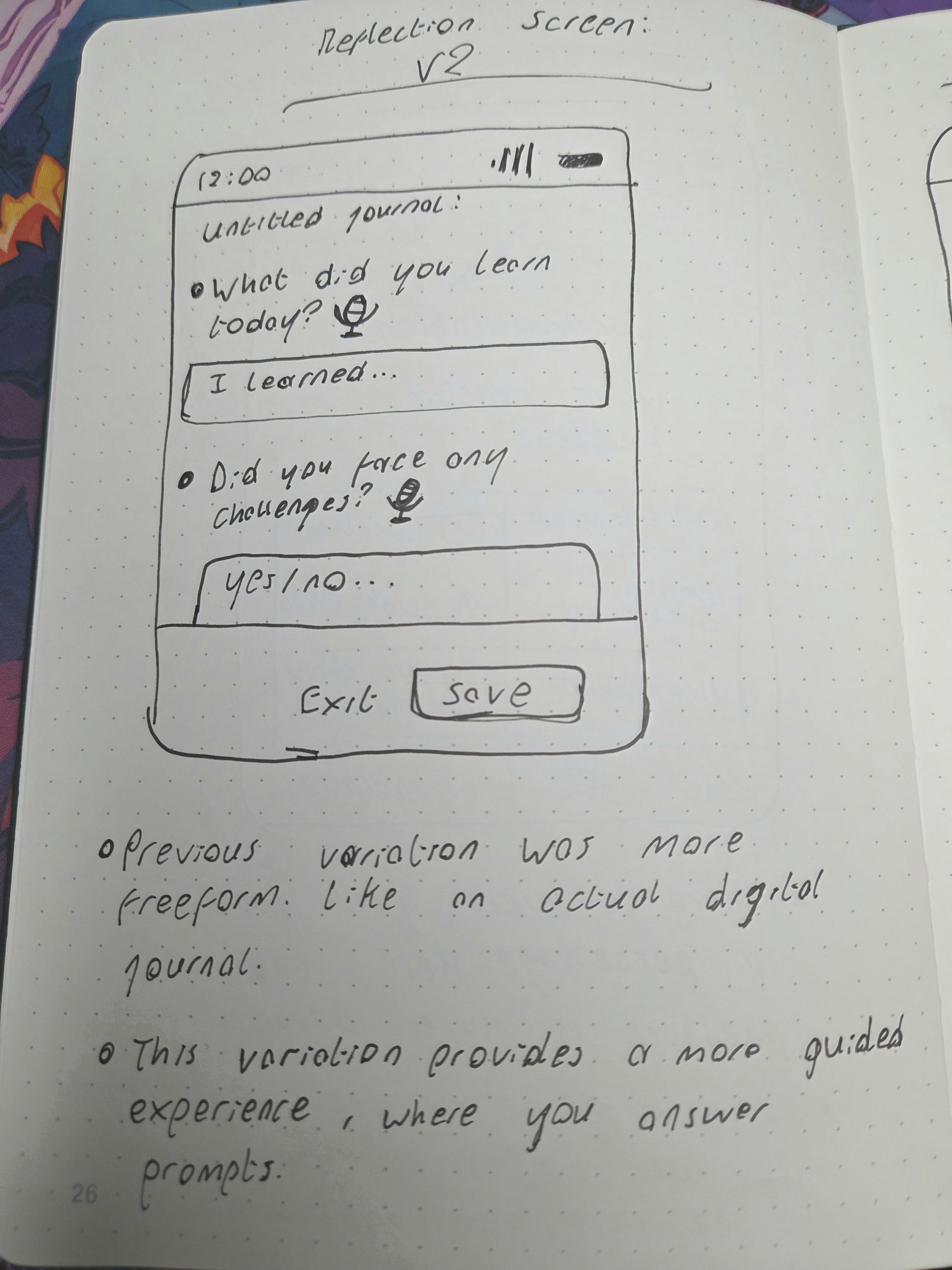
I sketch a lot, and I start early.
Sketches are forgiving. They let me explore layouts and ideas without the distraction of tools or unnecessary complexity. Starting with low-fidelity sketches helps me focus on the core parts of the design first, rather than getting caught up in the details too soon.


Refining the Experience Through Iteration
I focus on progress over perfection, shaping each version into something better through iteration.
Usability Testing
To evaluate the experience, I conducted 2 rounds of moderated testing with 5 participants. This allowed me to identify usability issues early and refine the interface before finalizing the design.
Round 1
%
Participants responded positively to the idea of contextual language learning, particularly lessons based on real-life conversations.
However, testing revealed several usability issues.
%
Participants felt the swipe-based mentor matching felt too similar to a dating app. Most preferred browsing mentors in a list instead.
%
Participants said they were unlikely to use the journaling feature regularly.
%
Participants hesitated when interpreting certain navigation icons.
Changes Implemented


Round 2
%
Participants navigated the interface without hesitation. Updated iconography removed the confusion previously seen during the first round.
%
Participants preferred browsing mentors through a list rather than swiping. Being able to explore profiles at their own pace helped reduce pressure and increased their sense of control.
%
Participants said removing the journaling feature made the app feel more focused.
But there were some remaining pain points.
%
Participants felt the transition from the subscription screen back to the dashboard was abrupt and lacked a clear confirmation that the process was complete.
%
Participants suggested adding clearer progress indicators (e.g., “Step 1 of 3”) to help them understand how many tutorial steps remained.
Changes Implemented


Creating a Brand That Feels Warm and Approachable
The name LinguaLink combines two key ideas that define the product:
• Lingua - derived from Latin, meaning language or tongue.
• Link - represents connection, emphasizing the app’s goal of helping users connect with people and communities.
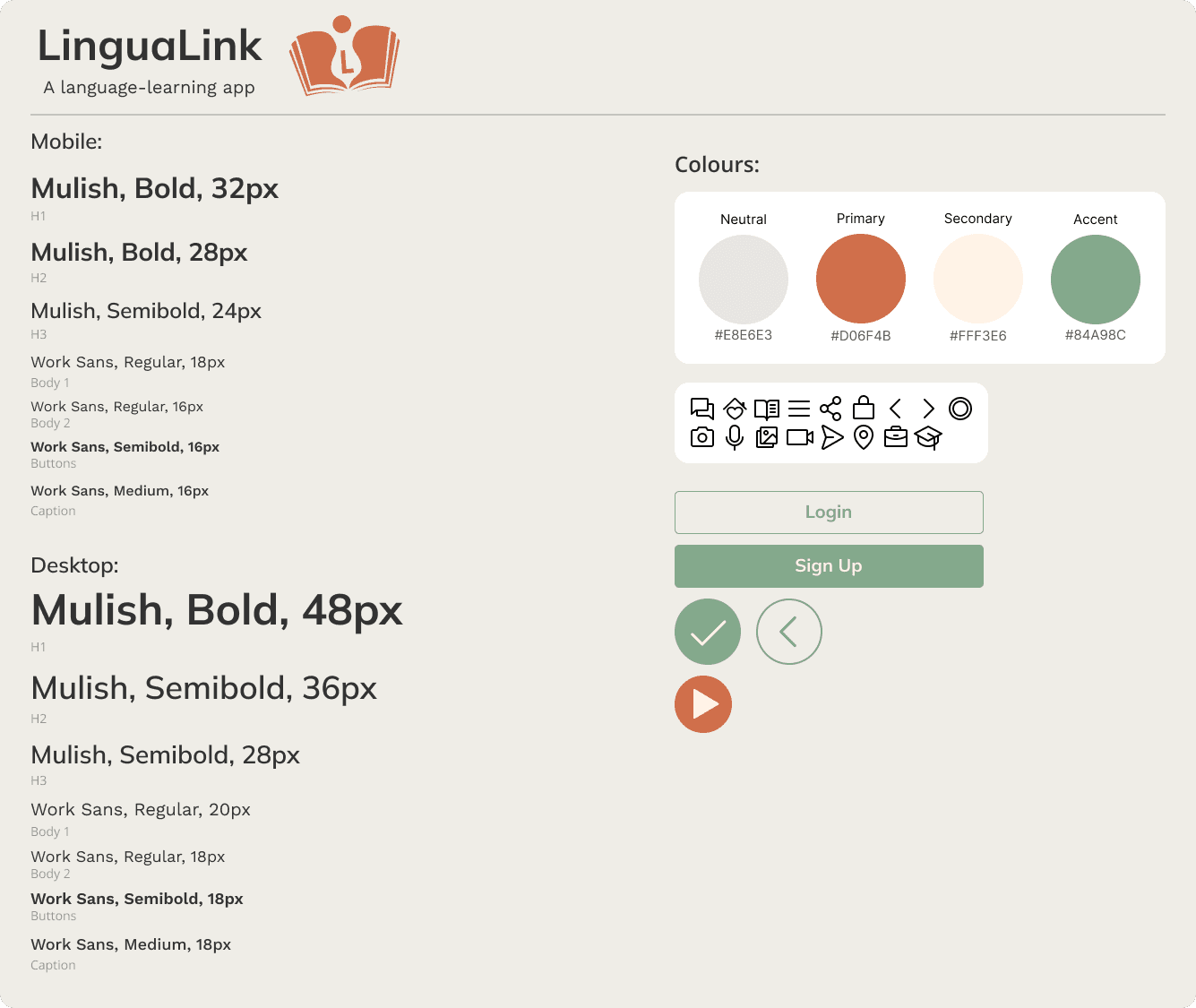
Fonts
• The typeface balances personality with professionalism, giving the interface a friendly but trustworthy feel.
• Its softer letterforms support LinguaLink’s inclusive and approachable values while maintaining a clear visual hierarchy across different screen sizes.
• The font also meets WCAG accessibility standards, helping reduce visual strain and improving readability for learners.
Colours
• Warm clay creates a sense of approachability, avoiding the cold, corporate feel. It reflects the conversational and supportive nature of language learning.
• Soft cream provides visual breathing room, keeping the interface open and welcoming while reducing harsh contrast that could make the experience feel intimidating.
• Leaf green represents growth, progress, and confidence. It reinforces achievements and positive feedback, visually supporting LinguaLink’s goal of helping users grow through learning and connection.
Logo
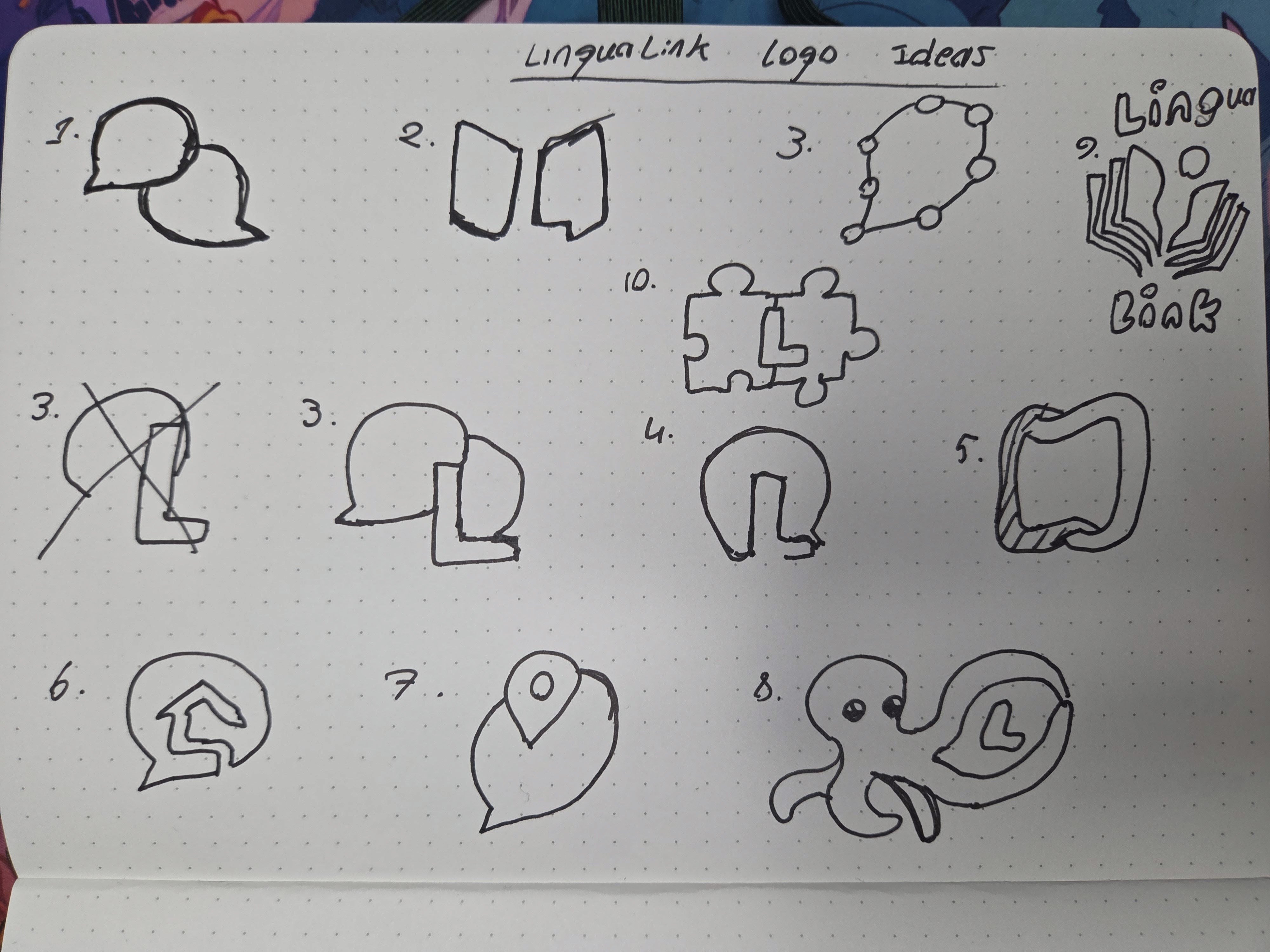
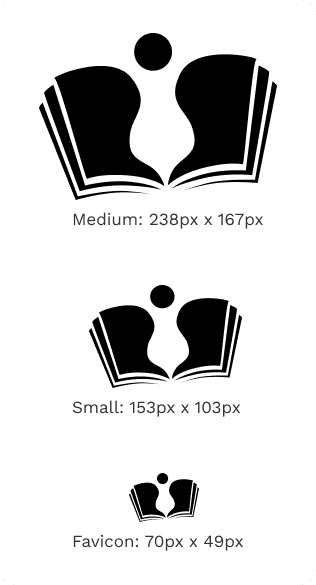
By merging the elements of the open book and the human figure, the logo visually communicates the product’s core mission: bringing people and language learning together.
The Final Design
Creating an Account

Mentors

Completing a Lesson

Opportunities Beyond the MVP
While usability testing confirmed that LinguaLink provides a clear and supportive language-learning experience, several opportunities for future development emerged.
• One potential improvement could be the introduction of community-driven learning; a discussion space or community forum could allow users to share experiences, ask questions, and exchange tips about living in a new country.
• Future iterations could also explore more personalized learning paths. By tracking user progress and identifying areas of difficulty, LinguaLink could adapt lesson content to better match individual learning needs.
Looking Back on the Journey
Many parts of this project went through multiple rounds of iteration and testing before reaching the final result. Because the problem is something I personally relate to (and one that affects people close to me and others I spoke with) the project felt especially meaningful. It made the process even more rewarding knowing the potential impact it could have if developed into a real app.
Some Things I've Learned

Design is an iterative process. Testing and refinement was essential in shaping LinguaLink into a clearer and more intuitive experience.

Users don't always behave as expected. Features that seemed strong in theory, like journaling, didn’t resonate with users during testing.

Simplicity improves usability. Removing certain features made the experience more focused.